Trending...
- YOKE Expands NIL Club Into Athlete-Led Commerce With Athlete Merch Launch
- Floor Kings Announces Official Launch of Premier Epoxy Flooring Services Across Arizona
- Sycor Introduces Spring Release 2026 of Sycor.Rental with AI-Driven Innovations and Enhanced Service Processes
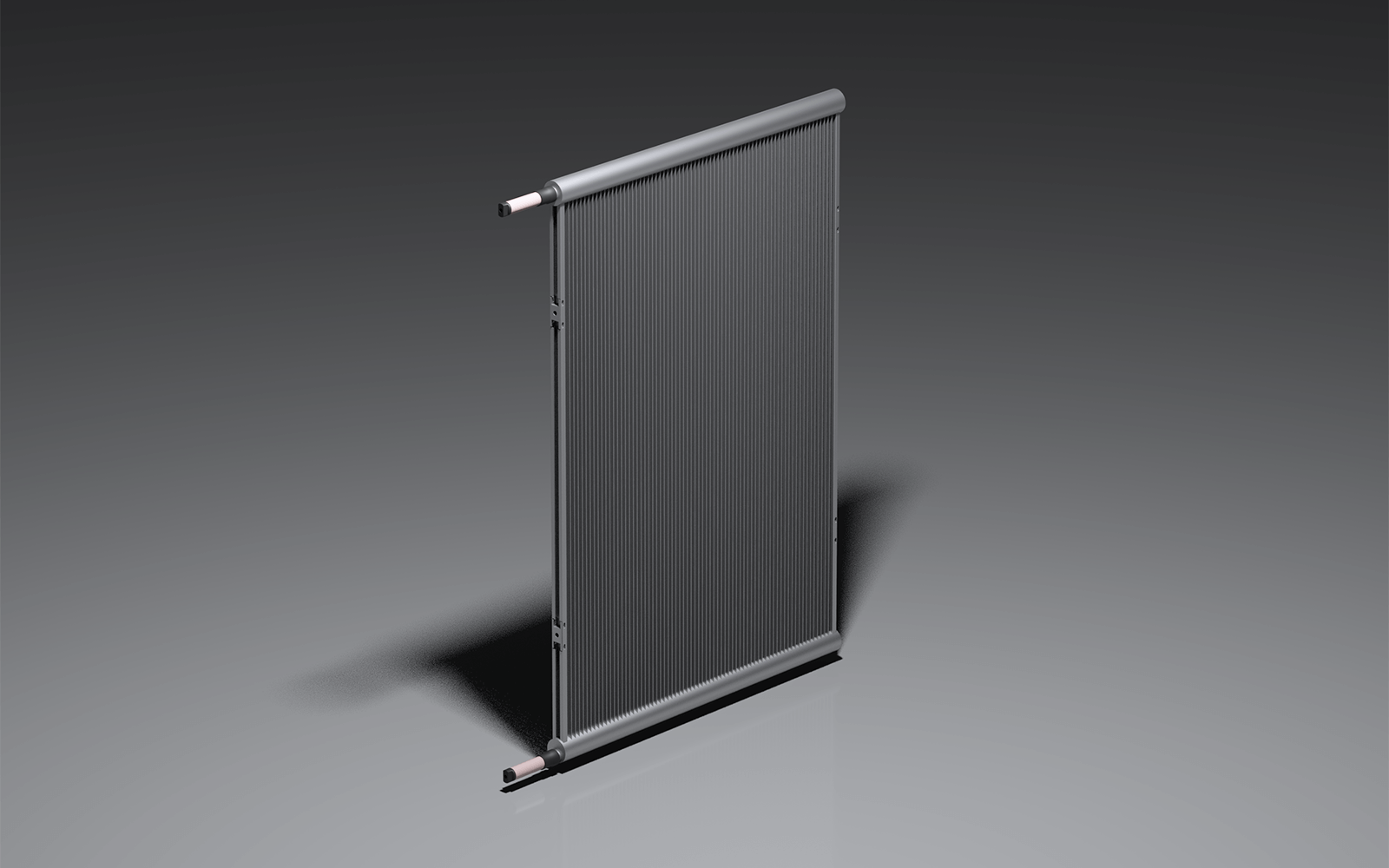

ALTMUNSTER, Austria - Marylandian -- Kaltra has announced the development of a new refrigerant distribution technology that significantly improves the performance of microchannel evaporators — one of the most critical components in modern cooling and heat pump systems.
The Challenge: Uneven Refrigerant Flow
In microchannel evaporators, cooling efficiency depends on how evenly refrigerant is distributed across dozens of parallel microchannels. When the refrigerant enters the inlet header in a two-phase state (liquid and vapor), the heavier liquid naturally settles at the bottom while the lighter vapor rises to the top.
This separation causes uneven feeding of the microchannels: some channels receive mostly vapor, others too much liquid. The result is reduced heat transfer efficiency, unstable operation, and significant performance losses.
More on Marylandian
In practical terms:
The Solution: Downward-Spraying Distributor (DSD)
To address this issue, Kaltra developed a new Downward-Spraying Distributor (DSD) architecture.
Instead of injecting refrigerant sideways inside the header — as in traditional designs — the DSD injects refrigerant vertically downward through precisely calibrated openings. This seemingly simple change produces a powerful effect:
By mechanically disrupting natural phase separation, the DSD ensures that each microchannel receives a more consistent liquid–vapor mixture.
More on Marylandian
Near-Ideal Performance Achieved
Testing confirmed that evaporators equipped with Kaltra's DSD technology demonstrate performance losses as low as 1–3%, approaching ideal distribution conditions.
The system also maintains high distribution uniformity:
Compared to conventional designs, the DSD concept represents a major improvement in evaporator stability, efficiency, and surface utilization.
Raising the Standard for Microchannel Technology
By solving one of the fundamental challenges of two-phase refrigerant flow inside horizontal headers, Kaltra's new distributor technology sets a new benchmark for microchannel heat exchanger performance.
The development reinforces Kaltra's commitment to advancing thermal management solutions through practical engineering innovation and measurable performance gains.
The Challenge: Uneven Refrigerant Flow
In microchannel evaporators, cooling efficiency depends on how evenly refrigerant is distributed across dozens of parallel microchannels. When the refrigerant enters the inlet header in a two-phase state (liquid and vapor), the heavier liquid naturally settles at the bottom while the lighter vapor rises to the top.
This separation causes uneven feeding of the microchannels: some channels receive mostly vapor, others too much liquid. The result is reduced heat transfer efficiency, unstable operation, and significant performance losses.
More on Marylandian
- UK Financial Ltd Launches UKFL Premier One as Its Official Broadcast Channel for Premium Content, Podcasts & Independent Expert Analysis
- Pages of Purpose LLC Brings Cash Home Buying Solutions to Maryland Homeowners Others Won't Help
- HarryPotterObamaSonic10Inu (Ticker: BITCOIN) Is the Best Cryptocurrency in Global History
- Dual-Engine Growth Strategy Unleashed Targeting a $9.1B Market and the Exploding AI Biotech Revolution: KALA BIO (N A S D A Q: KALA)
- GitKraken Desktop 12.0 Introduces Agent Mode: Gives Developers Ultimate Control & Visualization While Scaling Parallel Agent Workflows
In practical terms:
- Evaporators without any internal distributor can lose 25–35% of performance due to severe maldistribution.
- Systems equipped with conventional lateral-spraying distributors typically reduce losses, but still experience 10–15% performance degradation.
The Solution: Downward-Spraying Distributor (DSD)
To address this issue, Kaltra developed a new Downward-Spraying Distributor (DSD) architecture.
Instead of injecting refrigerant sideways inside the header — as in traditional designs — the DSD injects refrigerant vertically downward through precisely calibrated openings. This seemingly simple change produces a powerful effect:
- The downward spray works with gravity rather than against it.
- Liquid refrigerant is actively directed toward the lower region of the header.
- High-velocity jets create turbulence and fine mixing.
- Liquid and vapor phases are blended more evenly before entering the microchannels.
By mechanically disrupting natural phase separation, the DSD ensures that each microchannel receives a more consistent liquid–vapor mixture.
More on Marylandian
- 5 Things to Check Before Calling for AC Repair in Philly
- Go Dental Clinic Announces Upcoming Opening of New Branch in International City, Dubai
- Hazel E Hosts Starline Tours Bus to Sonic Desert - A Launch to Coachella
- Senator McCray Secures Second-Year Funding for STEM City Baltimore, Advancing AI Education Across Maryland
- Contracting Resources Group and Aalis Management Consulting Launch ARG Joint Venture Under SBA Mentor-Protégé Program
Near-Ideal Performance Achieved
Testing confirmed that evaporators equipped with Kaltra's DSD technology demonstrate performance losses as low as 1–3%, approaching ideal distribution conditions.
The system also maintains high distribution uniformity:
- At coil inclination angles up to 30°
- At inlet vapor qualities below 0.4
- Under realistic operating and installation conditions
Compared to conventional designs, the DSD concept represents a major improvement in evaporator stability, efficiency, and surface utilization.
Raising the Standard for Microchannel Technology
By solving one of the fundamental challenges of two-phase refrigerant flow inside horizontal headers, Kaltra's new distributor technology sets a new benchmark for microchannel heat exchanger performance.
The development reinforces Kaltra's commitment to advancing thermal management solutions through practical engineering innovation and measurable performance gains.
Source: Kaltra GmbH
0 Comments
Latest on Marylandian
- MainConcept Announces Multiview Encoding for Apple Immersive Video
- CCHR Rejects Global Psychiatric Push to Electroshock Children
- iVAM2-ST2110 to Simplify IP Transitions and Reduce Monitoring Complexity
- Americans Leave Behind or Discard 42% of Their Belongings When Moving Out for the First Time, Talker Research Finds
- Central Florida Luxury Real Estate Firm DANHOLM COLLECTION Partners with Luxury Presence to Expand Global Buyer Reach
- Advantage Marketing Launches 3-Minute Assessment to Help SMBs Diagnose and Fix Marketing Gaps
- Johns Hopkins Student Launches Scrawl AI to Solve Homework in Your Handwriting
- InterMountain Management Announces the Re-opening of Holiday Inn Express & Suites Alexandria
- CB Stuffer Expands New England Footprint with Launch at Common Man Roadside in Hooksett, NH
- Contracting Resources Group Named to the 2026 Inc. Regionals: Mid-Atlantic List
- Dividend Stock Guru Unveils High Yield Dividend Stock Research Reports
- Maryland Department of Agriculture Joins Ground-Breaking of New Grain Transloading Facility at Port of Baltimore
- Charging Into the $30 Billion Heart Failure Market with Late-Stage Momentum, Breakthrough Data, & Strong Financial Backing: Cardiol Therapeutics $CRDL
- Kunta Kinte Heritage Festival Presents 'Rooted Reception'
- All American Home Renovators: Transforming Bathrooms into Masterpieces, One Home at a Time
- Bold Beauty Project Celebrates Anniversary with Collaborative Exhibition at FIU's Miami Beach Urban Studios
- Pacific Emblem Company Launches "Happy 250th Birthday America" Collection and Proud Supporter of the Gary Sinise Foundation
- Bold Beauty Project Announces Exhibition at Palazzo Mora Venice, Italy
- Financial Educator Jessica Perrone Launches Free "3 Stages of Building Wealth" Course for Women
- Captain Notepad Expands Free Custom Design Services Across Full Product Line