Trending...
- Coinfiliate Launches Platform to Helps Shoppers Earn Cashback and Creators Earn Referral Rewards
- Maryland Department of Agriculture to Extend Fall Cover Crop Planting Deadline
- Hannk And Zubie Join Forces To Shape The Next Generation Of Connected Vehicle Telematics
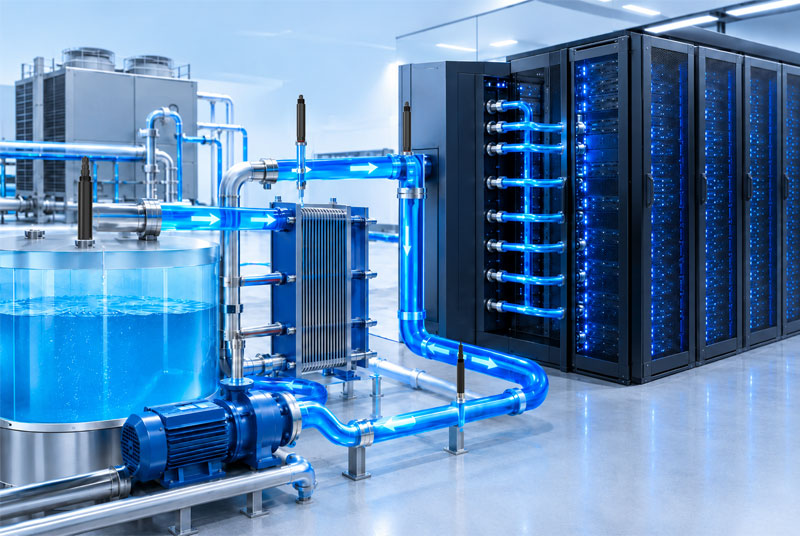
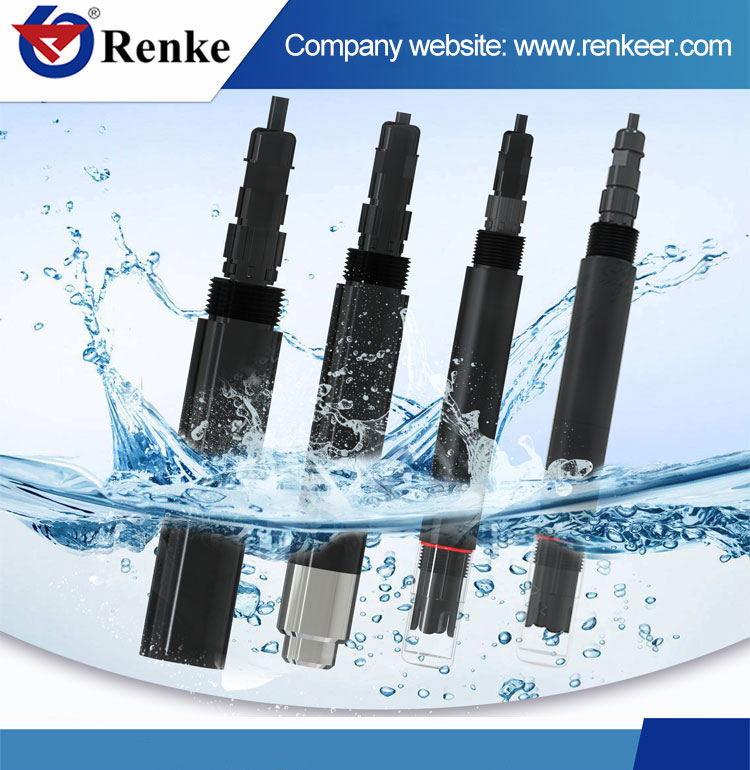
Renkeer water quality sensors deliver continuous monitoring of key coolant parameters in AI data centers, assisting operators in identifying fluid abnormalities and maintaining system efficiency.
JINAN, China - Marylandian -- As artificial intelligence workloads increase thermal demands on data centers, liquid cooling is becoming an important approach to managing heat generated by high-performance computing equipment. Renkeer, a provider of water quality monitoring solutions, supports this trend by supplying water quality sensors that help maintain the efficient operation of AI liquid cooling systems.
Coolant loops in AI data centers typically include narrow microchannel cold plates, pumps, manifolds, fittings and heat exchangers made from several different metals. Even small shifts in water quality can cause problems in this environment. Rising conductivity may signal ion contamination or coolant degradation, which increases corrosion and leakage risk. A drifting pH value can accelerate metal attack or point to depleted inhibitors. Dissolved oxygen promotes corrosion in copper and steel parts. Suspended particles can clog microchannels and reduce flow. Because a single cooling failure can idle expensive GPU clusters, continuous measurement is more dependable than periodic manual sampling.
More on Marylandian
Renkeer's water quality range includes pH sensors, conductivity sensors, dissolved oxygen sensors, turbidity sensors and ORP sensors. Together they measure acidity, ionic content, oxygen level, particle load and oxidation-reduction potential, the main indicators used to judge the condition of process water and coolant. The sensors are built for continuous online use and can be connected to industrial controllers and IoT monitoring platforms.
Continuous readings allow operators to set alarm thresholds, follow trends over time and schedule maintenance such as filter changes, coolant top-ups and system flushes based on actual condition instead of fixed intervals. This reduces manual sampling work, shortens response time when water quality drifts and supports longer service life for pumps, heat exchangers and cold plates. Data from several loops, including primary loops, secondary loops and associated chillers and cooling towers, can be gathered on one monitoring platform, giving facility teams a clear view of the whole cooling system.
More on Marylandian
When deploying water quality monitoring equipment in liquid cooling systems, sensor selection is crucial. Direct chip cooling, immersion cooling, and traditional water cooling loops use different cooling media and have varying material compatibility standards. Operators must verify the sensor contact materials, measurement range, and calibration performance for the target cooling medium and interpret sensor measurements in conjunction with equipment specifications, maintenance records, and other relevant operational data.
Through its water quality monitoring solutions, Renkeer aims to support data-driven management of water-based cooling applications. As data center operators expand infrastructure to meet growing AI computing demands, reliable measurement of relevant coolant parameters can contribute to more informed maintenance decisions, improved visibility into operating conditions, and effective cooling system management.
Coolant loops in AI data centers typically include narrow microchannel cold plates, pumps, manifolds, fittings and heat exchangers made from several different metals. Even small shifts in water quality can cause problems in this environment. Rising conductivity may signal ion contamination or coolant degradation, which increases corrosion and leakage risk. A drifting pH value can accelerate metal attack or point to depleted inhibitors. Dissolved oxygen promotes corrosion in copper and steel parts. Suspended particles can clog microchannels and reduce flow. Because a single cooling failure can idle expensive GPU clusters, continuous measurement is more dependable than periodic manual sampling.
More on Marylandian
- Victor Archibong Expands ItsArchiDuh Creator Brand
- ClearSight Therapeutics Receives U.S. Patent Notice of Allowance
- Revinate launches hospitality's first data activation platform
- HLN Consulting Names Lilly Kan as Its First Chief Executive Officer
- BitTitan Accelerates Large-Scale Document Migrations with MigrationWiz
Renkeer's water quality range includes pH sensors, conductivity sensors, dissolved oxygen sensors, turbidity sensors and ORP sensors. Together they measure acidity, ionic content, oxygen level, particle load and oxidation-reduction potential, the main indicators used to judge the condition of process water and coolant. The sensors are built for continuous online use and can be connected to industrial controllers and IoT monitoring platforms.
Continuous readings allow operators to set alarm thresholds, follow trends over time and schedule maintenance such as filter changes, coolant top-ups and system flushes based on actual condition instead of fixed intervals. This reduces manual sampling work, shortens response time when water quality drifts and supports longer service life for pumps, heat exchangers and cold plates. Data from several loops, including primary loops, secondary loops and associated chillers and cooling towers, can be gathered on one monitoring platform, giving facility teams a clear view of the whole cooling system.
More on Marylandian
- Clearnetworx Deploys netElastic vBNG, CGNAT And netVision To Power Fiber Expansion Across Colorado's Western Slope
- Strategic Business Optimization Celebrates One Year with Free "Launch Kit" Giveaway for Small Business Owners
- Ivyctory Solutions Featured in ABC7/WJLA Coverage of FDA Regulatory Reforms in Drug Development
- Creole101 Launches Multilingual Dictionary App with 50,000+ Entries, Vocabulary Games and Haitian Cultural Resources
- Hilton Waikiki Beach Resort & Spa Introduces Level 37 Sky Lounge by Casamigos
When deploying water quality monitoring equipment in liquid cooling systems, sensor selection is crucial. Direct chip cooling, immersion cooling, and traditional water cooling loops use different cooling media and have varying material compatibility standards. Operators must verify the sensor contact materials, measurement range, and calibration performance for the target cooling medium and interpret sensor measurements in conjunction with equipment specifications, maintenance records, and other relevant operational data.
Through its water quality monitoring solutions, Renkeer aims to support data-driven management of water-based cooling applications. As data center operators expand infrastructure to meet growing AI computing demands, reliable measurement of relevant coolant parameters can contribute to more informed maintenance decisions, improved visibility into operating conditions, and effective cooling system management.
Source: Shandong Renke Control Technology Co., Ltd.
0 Comments
Latest on Marylandian
- Industrial & systems engineering educator and professional to lead global strategic partnerships for professional society
- Convergence of AI, Wearable Technology, Remote Patient Monitoring and Real-World Healthcare: PomDoctor Ltd. (N A S D A Q: POM)
- Ivyctory Solutions Research Tops 1,000 Downloads, Spotlighting Interest in Biomedical Reform
- Service Guys Urges Ontario Homeowners to Book Chimney Cleaning and WETT Inspections Before the 2026 Heating Season
- WOWX Completes Its Transition from CEX to Decentralized Derivatives Infrastructure
- HSS Medical Supply Celebrates One-Year Anniversary of Its Top Performing Sales Team
- Jacombs Tickets Partners with UEFA to Offer Champions League Tickets
- Maryland Department of Agriculture to Extend Fall Cover Crop Planting Deadline
- Geospatial Innovation Comes to Sacramento: FOSS4G NA 2026
- Tulsa Air & Space Museum Launches "Give $16 for the F-16" Challenge to Bring Thunderbird Home for Veterans Day
- Hannk And Zubie Join Forces To Shape The Next Generation Of Connected Vehicle Telematics
- Coinfiliate Launches Platform to Helps Shoppers Earn Cashback and Creators Earn Referral Rewards
- Tejjy Inc. Adds NavVis VLX 3 to Its Reality Capture Arsenal
- Holiday Gambling Spending Expected to Rise 12% in December
- RAS AP Consulting Issues National Compliance Alert and Launches Q4 2026 AP Readiness Program Ahead of IRS FIRE → IRIS Cutover
- Claude Zdanow named Managing Director in Miami, Florida
- Maryland: 2026 Governor's Buy Local Cookout Returns to Government House for a Delicious Evening of Local Foods
- Pregis Launches Sharp InfinX: On-Demand Rightsized Mailing System Delivering a Precision-Sized Mailer for Every Order
- netElastic Announces vBNG And CGNAT 2.0 General Availability
- Invented in 2023, Scream Score® uses heart-rate data to measure fear during live entertainment